what are the basic principles of accounting

This way, conservatism principle results in lower reported profits due to delayed recognition of assets and revenue. Under this principle, businesses should recognize expenses – even if there’s the expectation that they’ll be incurred. Conversely, businesses should only record revenue when there’s a deal of confidence that it will be formally paid, often by either an invoice or purchase order. The conservatism principle allows businesses to have a much more conservative financial outlook. Following this principle and over-estimating expenses rather than revenue tends to be better for overall cash flow. It allows an accountant to anticipate losses better and maintain a more careful financial outlook.

IFRS Connection

By using historical costs, the accountant’s already difficult task is not further complicated by the need to keep additional http://vo.od.ua/rubrics/raznoe/41287.php records of changing market value. Thus, the cost concept provides greater objectivity and greater feasibility to the financial statements. The conservatism principle advises expecting losses rather than hoping for profits. It means recording expenses and liabilities as soon as they occur but only recording assets and revenue when they are certain.

  • Today, the Financial Accounting Standards Board (FASB), an independent authority, continually monitors and updates GAAP.
  • Debt capital covers money obtained through credit instruments such as loans.
  • An accounting period is usually a 12-month period – either calendar or fiscal.
  • The separate entity assumption, therefore, enables one to prepare financial statements just for the sole proprietorship or just for the partnership.
  • However, not all business owners have the time or means to pursue formal training.

Six Accounting Principles Every Business Should Know

what are the basic principles of accounting

Eligibility standards also include at least 150 hours of higher education covering related coursework. However, not all business owners have the time or means to pursue formal training. Students sometimes enter accounting programs with little technical knowledge.

Expense Recognition (Matching) Principle

Typically, accounting principles are based on underlying concepts and assumptions and provide a framework for classifying and interpreting financial data based on GAAP. Insurance Expense, Wages Expense, Advertising Expense, Interest Expense are expenses matched with the period of time in the heading of the income statement. Under the accrual basis of accounting, the matching is NOT based on the date that the expenses are paid. Since most of a company’s assets are reported at cost (or lower), the amount reported as stockholders’ equity is not an indicator of the corporation’s market value.

what are the basic principles of accounting

Some expenses such as administrative costs and employee salaries cannot be directly linked with revenue, of course; these expenses are recorded simply as expenses for the current period. While the GAAP includes a range of accounting standards for businesses to follow, it has set 10 fundamental principles. Another body, the American Institute of Accountants (AIA), has created its own basic principles of accounting dating back to the aftermath of the 1929 Wall Street crash that started the Great Depression. The AIA suggests that businesses follow five basic principles, yet more have been added over the years. Combined with GAAP principles, there are several accounting best practices that firms should abide by.

What Are Accounting Principles: A Clear Explanation

Companies can still suffer from issues beyond the scope of GAAP depending on their size, business categorization, location, and global presence. “Intermediate Accounting” by Donald E. Kieso, Jerry J. Weygandt, and Terry D. Warfield. This book is widely recognized as an authoritative source for accounting practices. It provides detailed explanations of GAAP principles and their applications in various scenarios. The Principle of Prudence’s core idea is to promptly acknowledge costs and obligations in situations of http://www.best-lance.ru/?&page=140 uncertainty while deferring the recognition of income and assets until their certainty is assured.

what are the basic principles of accounting

The procedural part of accounting—recording transactions right through to creating financial statements—is a universal process. Businesses all around the world carry out this process as part of their normal operations. This principle states that accounting transactions should be recorded in the periods in which they occurred rather than the periods in which the cash flows were earned. This helps create accurate financial statements and accounts rightfully for expenses and revenue.

Example Permanence Principle: FIFO (First-In, First-Out) Inventory Method

Stated differently, everything https://www.lyricsworld.ru/lyrics/Laura-Branigan/Mujer-contra-mujer-14552.html a company owns must equal everything the company owes to creditors (lenders) and owners (individuals for sole proprietors or stockholders for companies or corporations). For example, Lynn Sanders purchases two cars; one is used for personal use only, and the other is used for business use only. According to the separate entity concept, Lynn may record the purchase of the car used by the company in the company’s accounting records, but not the car for personal use.


subscribe to dialogue

Stay up to date with latest Reon news and industry innovations

We won’t send you spam. Unsubscribe at any time

qbse

You can also add a rule to past transactions based on how you’d want them Law Firm Accounts Receivable Management to be categorized for the future. It also estimates your quarterly tax payments and gives annual tax data. Among the many handy accounting features of QBSE, automatic mileage tracking might be the most unique. From a tax perspective, the IRS lets you deduct miles driven for business purposes—but you had better be prepared to back up your claim in the event of an audit.

qbse

Frequently asked questions

Moreover, you might want to explore our most recent QuickBooks Solopreneur. It offers enhanced features for organizing your business and personal transactions, monitoring mileage, and assessing your business performance. Our range of simple, smart accounting software solutions can help you take your business to the next level. Once you’ve chosen your plan, there’s no hidden fees or charges.

When trying to log in to QuickBooks Self Employed, I get the following error: HTTP Status 400 – Bad Request.

qbse

Also, during the initial set up, the best way to separate business finances from personal finances is cash flow to simply not add personal accounts to QuickBooks. For example, you likely have a business checking account and a personal checking account. If you only add your business account to QuickBooks, you’ll only track business transactions, keeping your tax details much more clean.

Self-Employed Turbo Tax Bundle

  • Please let me know if there’s anything else that we can do to help you manage vehicles and mileage data in QBSE.
  • Explore Semrush pricing plans and features to find the best fit for your business.
  • If your existing data is still missing after reinstalling the app, you can log in to your QuickBooks account using a web browser to check the file.
  • Just click Reply, and we’ll be here to help you quickly.
  • It includes easy to use organization, tax and growth focused tools to help drive financial stability.

Also, I’ve added this helpful article that will provide answers from FAQs when using QuickBooks Self-Employed. Please head to the QuickBooks Self-Employed Overview page. Also, you can only sync your existing TurboTax Self-Employed and QuickBooks Self-Employed account if you use same log-in credentials for both accounts.

  • The allowable expenses you can claim under Self Assessment must be for business use only and they vary depending on the business you’re in.
  • Notify us below if you need further assistance managing these data within the program.
  • Moreover, you might want to consider checking out our latest QuickBooks Solopreneur.
  • Log in and then Quickbooks Self-Employed will automatically download 90 days of transactions for you.
  • If you were impacted, the fix will automatically apply to you.

QuickBooks Solopreneur

You can cancel your existing QuickBooks Online (QBO) subscription and sign up for a new QuickBooks Self-Employed (QBSE) account. This is because both platforms are different and designed for specific types of businesses. If you’re an Independent Contractor and need to separate your business and personal expenses, you can use the QBSE. Otherwise, you can use the QuickBooks Online Plus/Essentials/Simple Start.

qbse

qbse

However, QBO might be too expensive or too difficult to use if you’re a sole proprietor. The app uses your phone’s GPS capabilities to automatically track your mileage when you start driving, and it creates a discrete trip when you stop. The app then prompts you to designate that trip as personal or business and, if business, to identify its purpose. No more need to reconstruct your travels in a panic every year on April 14. If the qbse issue persists, I suggest contacting our QuickBooks Self-Employed Support Team for additional assistance. They have the necessary tools to access your account in a safe environment to investigate further.

subscribe to dialogue

Stay up to date with latest Reon news and industry innovations

We won’t send you spam. Unsubscribe at any time

Conversely, when the company makes a payment on its account payable, it records a debit entry in the Accounts Payable account, decreasing its balance. By understanding and tracking the normal balance of Accounts each asset account has a normal credit balance. Payable, businesses can manage their short-term financial obligations efficiently. Asset accounts normally have debit balances, while liabilities and capital normally have credit balances.

The Income Statement Accounts Have an Immediate Effect on Owner’s Equity or Stockholders’ Equity

Debits and credits represent the left and right side of the account, respectively. Under this system, when bookkeepers enter a journal entry, there should be debit and credit amounts entered and they should be equal. Accruing tax liabilities in accounting involves recognizing and recording taxes that a company owes but has not yet paid. This is important for accurate financial reporting and compliance with… Based on the rules of debit and credit (debit means left, credit means right), we can determine that Assets (on the left of the equation, the debit side) have a Normal Debit Balance.

Company

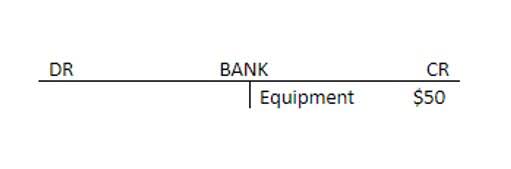
Accounts that typically have a debit balance include asset and expense accounts. A visual aid used by accountants to illustrate a journal entry’s effect on the general ledger accounts. Debit amounts are entered on the left side of the “T” and credit amounts are entered on the right side. Accounts are the bookkeeping or accounting records used to sort and store a company’s transactions. The accounts can be found in the company’s general ledger.

Debits and Credits Chart

After reviewing the feedback we received from our Explanation of Debits and Credits, I decided to prepare this Additional Explanation of Debits and Credits. In it I use the accounting equation (which is also the format of the balance sheet) to provide the reasoning why accountants credit revenue accounts and debit expense accounts. When I purchase something, it means exchanging resources for an asset.

What is a Normal Account Balance?

Thousands of people have transformed the way they plan their business through our ground-breaking financial forecasting software. When looking to assess your business’ financial performance, one of the most important metrics to keep in mind is EBIT (Earnings Before Interest… In the world of business, there’s a critical distinction between different types of profit that can impact decisions at every level. Year-over-year (YOY) is a financial term used to compare data for a specific period of time with the corresponding period from the previous… Let’s recap which accounts have a Normal Debit Balance and which accounts have a Normal Credit Balance.

  • Since Cash (an Asset) has a normal debit balance and Sales (an Income account) has a normal credit balance, the transaction above increased the Cash and Sales accounts.
  • This graphic representation of a general ledger account is known as a T-account.
  • The 500 year-old accounting system where every transaction is recorded into at least two accounts.
  • Asset accounts normally have debit balances, while liabilities and capital normally have credit balances.

Income has a normal credit balance since it increases capital. On the other hand, expenses and withdrawals decrease capital, hence they normally have debit balances. A contra account contains a normal balance that is the reverse of the normal balance for that class of account. The contra accounts noted in the preceding table are usually set up as reserve accounts against declines in the usual balance in the accounts with which they are paired. For instance, just as some people are naturally right- or left-handed, each type of account has a “hand” it favors—either debit or credit. An asset account, for example, naturally favors debits, so all increases in any asset account are recorded on the debit side.

AccountingTools

This would change the Normal Balance of inventory from credit to debit. An account in the general ledger, such as Cash, Accounts Payable, Sales, Advertising Expense, etc. Its abbreviation is dr. (Apparently the Italian or Latin word from which debit was derived included an “r”).

We will continue this discussion later, but for now take note that a credit entry is required to increase owner’s equity or stockholders’ equity. Double-entry means an accounting system in which every transaction is recorded with amounts entered in two or more accounts. Further, the amounts entered as debits must be equal to the amounts entered as credits. If this is done for every transaction and without errors, then all the amounts appearing in the accounts will have the total amount of debits equal to the total amount of credits.

  • After reviewing the feedback we received from our Explanation of Debits and Credits, I decided to prepare this Additional Explanation of Debits and Credits.
  • Do not think of debit as good, bad, or anything else.
  • In practice, we don’t do it this way—but I’m showing you this to help you grasp the concept before I introduce you to journal entries.

Hence, these accounts are also known as general ledger accounts. Debit is money-in if it increases assets related to cash, like cash on hand or cash in bank. It is money-out if it decreases cash assets such as payment of liabilities or expenses. In accounting, the rule is that debits and credits must be equal. Just like the scales, debits and credits must be balanced. And finally, we define what we call “normal balance”.

It is the side of the account – debit or credit – where an increase in the account is recorded. A normal balance is the expectation that a particular type of account will have either a debit or a credit balance based on its classification within the chart of accounts. It is possible for an account expected to have a normal balance as a debit to actually have a credit balance, and vice versa, but these situations should be in the minority. The normal account balance for many accounts are noted in the following exhibit. Accounts Payable is a liability account, and thus its normal balance is a credit. When a company purchases goods or services on credit, it records a credit entry in the Accounts Payable account, increasing its balance.

Here’s a table summarizing the normal balances of the accounting elements, and the actions to increase or decrease them. Notice that the normal balance is the same as the action to increase the account. This chart is useful as a quick reference to determine whether an increase or decrease in a particular type of account should be recorded as a debit or a credit.

When you make a debit entry to a revenue or expense account, it decreases the account balance. That’s an outflow, which causes the assets to decrease. Normally, I’d debit assets when they increase, but since paying reduces assets, I do the opposite. Before issuing the balance sheet, any errors (such as first two items) need to be corrected.

Ultimately, it’s up to you to decide which side of the ledger each account should be on. Normal balances can help you keep track of your finances and balance your books. On the other hand, when an account has a negative balance. In other words, it cancels out part of the balance of the related Normal Balance account. Such as money market funds and short-term government bonds. Because this represents money others owe to the company.

The permanent accounts are the balance sheet accounts. In general, debits are used to increase asset and expense accounts, while credits are used to increase liability and equity accounts. Temporary accounts are generally the income statement accounts. In other words, the temporary accounts are the accounts used for recording and storing a company’s revenues, expenses, gains, and losses for the current accounting year. I initially found it hard to understand debits and credits by looking at journal entries. They were easier to look at visually using the T-account.

One of the most challenging aspects of accounting is analyzing transactions, which involves the careful process of determining the appropriate debits and credits. If you get this wrong, everything that follows will be wrong. However, I will teach you a way to effectively analyze transactions.

subscribe to dialogue

Stay up to date with latest Reon news and industry innovations

We won’t send you spam. Unsubscribe at any time

performance budgeting

The resources are categorized Keep Records for Small Business according to the programs and provide performance indicators. It finds solution-based accountability management responsible for the objectives they have to achieve. Integrated financial management systems (IFMS) enable real-time tracking of expenditures and outcomes, facilitating timely and accurate reporting. For instance, a nonprofit might use an IFMS to generate quarterly reports with visualizations, such as charts and graphs, to illustrate trends.

performance budgeting

Purpose

In addition, it helps in identifying the organizational objectives, evaluating the program performances, and understanding the problems with the operations and structure of the program. Appropriate metrics, such as patient wait times or treatment success rates in healthcare, provide a clear picture of effectiveness. Tools like dashboards or balanced scorecards facilitate real-time performance monitoring, enabling organizations to identify areas for improvement and make data-driven decisions to enhance service quality. Selecting relevant metrics is critical for evaluating progress toward objectives. For instance, in healthcare, metrics might include patient wait times or treatment success rates. A balanced mix of quantitative and qualitative measures ensures bookkeeping organizations can adapt to changing circumstances and make data-driven decisions that foster continuous improvement.

Full Employment Examples in Key Industries and Financial Services

performance budgeting

A performance budget is a budget that refers to programs, functions, and performance that reflects the estimated expenses and revenues of the companies, Government, or Statutory bodies. It is a budget that provides the objective and purpose for raising funds and proposed activities and programs to be accomplished. Performance information refers to outputs and outcome targets, costs for delivering these targets, and assessments of effectiveness and efficiency of expenditures in attaining objectives. While performance-based information can provide a massive benefit to a country, it can not eradicate the political nature of budgeting. A performance budget, or performance-based budgeting, is a budget that is designed with outcomes in mind.

performance budgeting

Step #3 – Evaluation & Selection of the processes and plans

  • Performance measures can also identify high-performing parts of the business, which requires additional investment to maximize product or service efficiency.
  • Implementing a performance budget requires a structured approach that integrates strategic planning with financial management.
  • For example, a municipal government might aim to reduce traffic congestion by 20% within two years, directing funds toward infrastructure improvements and public transportation.
  • In other words, the allocation of funds and resources is based on specific goals agreed upon by budget committees and agency heads of services.
  • For instance, a nonprofit might use an IFMS to generate quarterly reports with visualizations, such as charts and graphs, to illustrate trends.

Besides his extensive derivative trading expertise, Adam is an expert in economics and behavioral finance. Adam received his master’s in economics from The New School for Social Research and his Ph.D. from the University of Wisconsin-Madison in sociology. He currently researches and teaches economic sociology and the social studies of finance at the Hebrew University in Jerusalem.

Defining Objectives

Similarly, nonprofit organizations draw up performance budgets to link inputs and outputs for their missions. Donors to these organizations also want to know what kind of return society is getting from their donations. A performance budget is vital for the organization to assess the performance of the persons handling the processes and remove the deviations they face while performing their tasks. For instance, teachers looking to earn a certain score may only focus on the factors that comprise that score and overlook or ignore other factors that may be important to teaching.

A defining feature of performance budgeting is its focus on connecting costs to outcomes. This involves analyzing the relationship between financial inputs and results, enabling organizations to assess the value of their expenditures. For instance, an education department might calculate the cost per student for various programs and compare these figures to student performance metrics. Such analysis highlights inefficiencies and helps direct resources to more productive uses. Robust data collection and adherence to financial reporting standards ensure accuracy and transparency throughout this process. Performance budgeting is a strategic approach to financial planning that aligns resources with desired outcomes.

performance budgeting

Performance-based budgeting necessitates setting up of specific objectives and fundamental goals for the subsequent year. The generation of extra performance budget revenue is not specific and therefore defined goals such as business positioning, which can enhance revenue generation, is an example of a clear objective. Business positioning involves other activities like product promotion, which are quantifiable.

  • This method supports informed decision-making, helping organizations allocate resources effectively to achieve their goals.
  • As the financial year progresses, line-item budgets dictate that spending must be within the budgeted amount unless formal budgetary amendments are permitted.
  • Tools like dashboards or balanced scorecards facilitate real-time performance monitoring, enabling organizations to identify areas for improvement and make data-driven decisions to enhance service quality.
  • The budget identifies and scores relative performance based on goal attainment for specified outcomes.
  • Performance-based budgeting removes such an inferior way of thinking and facilitates the expansion of business goals.

#4 – Better Decision Making

  • Donors to these organizations also want to know what kind of return society is getting from their donations.
  • It helps in improving management skills and implementing the management processes more efficiently.
  • Similarly, nonprofit organizations draw up performance budgets to link inputs and outputs for their missions.
  • For instance, it may set a goal of 200 vehicles to be bought in the company within a particular, fiscal year but do no set the limit of expenditure for each vehicle.
  • A government that implements a performance budgeting system needs a robust process for generating, analyzing and reporting on performance information.
  • Adam received his master’s in economics from The New School for Social Research and his Ph.D. from the University of Wisconsin-Madison in sociology.

The advantages in the public sector are an increase in accountability of the local authorities to the taxpayers, communication to the public about priorities, and quantifying particular goals. A performance budget would be developed accordingly to identify those target numbers. After identifying various processes and plans, the most profitable and easy to communicate and implement plans and processes should be evaluated and selected to achieve the objectives.

subscribe to dialogue

Stay up to date with latest Reon news and industry innovations

We won’t send you spam. Unsubscribe at any time

bookkeeping for small business owners

Whichever accounting method you choose, the best way to make sure you’re dotting your i’s and crossing your t’s is to maintain order in the way you manage your bookkeeping. When creating the company’s balance sheet, the FIFO method of valuation offers costs that most closely resemble the costs most recently incurred. Small businesses often work small business record keeping with tax advisors to help prepare their tax returns, file them and make sure they’re taking advantage of small-business tax deductions. Though you may not work regularly with a tax specialist year-round, you’ll want to connect with one sooner rather than later so you’re not rushed come tax time. Small-business bookkeeping involves setting up a framework, choosing your method and keeping track of details.

  • Accountants calculate cash flow by making adjustments to a business’s income statement.
  • The business owner I was talking with looked like she was on the verge of tears.
  • The best combine OCR and AI tools to make your data entry easier and less prone to mistakes.
  • Accrual accounting, on the other hand, records transactions when they’re committed to, not when money changes hands.
  • Intuit does not endorse or approve these products and services, or the opinions of these corporations or organizations or individuals.

Choose an entry system

bookkeeping for small business owners

Proper categorization also simplifies tax filing and financial reporting. Bookkeeping is unearned revenue the backbone of small business success, helping track financial transactions, manage cash flow, and stay tax-compliant. From simple single-entry methods to comprehensive double-entry systems, it ensures businesses make informed decisions. With automation, regular reviews, and industry-specific insights, bookkeeping is becoming smarter and more efficient. Partnering with experts like Fincent.com can free up time, reduce stress, and fuel long-term growth. Small business accounting requires accurate bookkeeping, which entails maintaining organized records of a business’s financial transactions, including sales, expenses, assets, and liabilities.

bookkeeping for small business owners

Why Do Small Businesses Need Bookkeeping?

  • Digital recordkeeping of your business’s finances can streamline your bookkeeping process, reduce clutter, and improve data security.
  • Having a solid overview of your bookkeeping and accounting reports gives you a good enough start for cash flow projections for the following months.
  • Weeks turn into months, and before you know it, it’s time to file taxes but all you have is a box of unorganized.
  • Now this may sound confusing, but if you’re using accounting software, much of this process is automated.
  • Bookkeeping ensures that decisions are made based on facts and data, not guesswork.

Since the IRS accepts digital records, it’s smart to use a cloud-based system like Dropbox, Evernote, or Google Drive so you never have to deal with smudged receipts. You can also use apps like Shoeboxed, which are specifically made for receipt tracking. Keeping an accurate, up-to-date set of books is the best way to keep track of tax deductions (expenses that you can deduct from your taxable income).

bookkeeping for small business owners

Best for Complex Businesses

  • Integrating the most recent communication systems into your business allows you to communicate better with your employees and clients.
  • We cover all insurance-related topics helpful for small business owners.
  • Spreadsheets, such as Microsoft Excel, can be used for simple bookkeeping.
  • It also includes customer dashboards, allowing clients to view invoices, make or accept payments, and track transactions.
  • You can look back, see patterns, and even draw comparisons with previous business years.
  • Sage Intacct is a great choice for retailers, wholesalers, and product-based businesses that require detailed financial reporting and scalable inventory management.
  • Choosing accounting software that integrates with your existing business tools can save hours of manual work.

Consider your local supermarket — the first gallons of milk the store purchased to sell to customers are the first gallons sold usually. Otherwise, a lot of milk (product) would spoil, thus creating a loss for the store. You can figure both your direct and indirect costs by performing a cost assignment to each type of good you produce or service you provide. Recording just the cost of those supplies with the cash method might give you an inaccurate picture of how much you are — or should be — spending on supplies.

A platform like FreshBooks, specifically designed for small business owners, can be transformational. Bookkeeping is the regular practice of updating a company’s financial records to reflect all financial transactions. There’s good news for business owners who want to simplify doing their books. Business owners who don’t want the burden of data entry can hire an online bookkeeping service.

bookkeeping for small business owners

Bookkeeping Helps You Prepare for Taxation

This content is for information purposes only and should not be considered legal, accounting, or tax advice, or a substitute for obtaining such advice specific to your business. No assurance is given that the information is comprehensive in its coverage or that it is suitable in dealing with a customer’s particular situation. Intuit Inc. does not have any responsibility for updating or revising any information presented herein. Accordingly, the information provided Grocery Store Accounting should not be relied upon as a substitute for independent research.

subscribe to dialogue

Stay up to date with latest Reon news and industry innovations

We won’t send you spam. Unsubscribe at any time

accounting formula

As a result the bad debts expense is more closely matched to the sale. When a specific account is identified as uncollectible, the Allowance for Doubtful Accounts should be debited and Accounts Receivable should be credited. Lastly, we will briefly examine the expanded accounting equation. It is easy to see that an additional investment by the owner will directly increase the owner’s equity.

Corporation Transaction C8.

An account with a balance that is the opposite of the normal balance. For example, Accumulated Depreciation is a contra asset account, because its credit balance is contra to the debit balance for an asset account. This is an owner’s equity account and as such you would expect a credit balance. Other examples include (1) the allowance for doubtful accounts, (2) discount on bonds payable, (3) sales returns and allowances, and (4) sales discounts. For example net sales is gross sales minus the sales returns, the sales allowances, and the sales discounts.

What is the purpose of the accounting equation?

The accounting equation is a factor in almost every aspect of your business accounting. A corporation’s own stock that has been repurchased from stockholders. Also a stockholders’ equity account that usually reports the cost of the stock that has been repurchased. Advertising Expense is the income statement account which reports the dollar amount of ads run during the period shown in the income statement. Advertising Expense will be reported under selling expenses on the income statement. Things that are resources owned by a company and which have future economic value that can be measured and can be expressed in dollars.

Net Income

accounting formula

This is a contra owner’s equity account, because it has a debit balance if draws were made. Even though it is a balance sheet account, it is a temporary account. At the end of each year the account’s debit balance is closed to J.

How to calculate equity in accounting?

  • (Some corporations have preferred stock in addition to their common stock.) Shares of common stock provide evidence of ownership in a corporation.
  • The accounting equation totals also tell us that the company had assets of $17,200 with the creditors having a claim of $7,120.
  • Instead, the amount is initially recorded in the expense account Advertising Expense and in the asset account Cash.
  • Due to the nature of the accounting formula, other elements can be moved around as needed to solve for unknown variables.
  • Every transaction is recorded twice so that the debit is balanced by a credit.
  • As this is not really an expense of the business, Anushka is effectively being paid amounts owed to her as the owner of the business (drawings).

Thus, all of the company’s assets stem from either creditors or investors i.e. liabilities and equity. As expected, the sum of liabilities and equity is equal to $9350, matching the total value of assets. So, as long as you account for everything correctly, the accounting equation will always balance no matter how adjusting entries many transactions are involved. The accounting equation states that a company’s total assets are equal to the sum of its liabilities and its shareholders’ equity. Shareholder Equity is equal to a business’s total assets minus its total liabilities.

accounting formula

As a result, the total amount of debits in the accounts will be equal to the total amount of credits in the accounts. (This can be verified with a trial balance.) In addition, the total of the asset account balances will be equal to the total of the liability account balances plus accounting formula the total of the equity account balances. This will be evidenced by the accounting equation and the company’s balance sheet.

Corporation Transaction C2.

accounting formula

It forms the basis of double-entry accounting, where every transaction results in a dual effect, ensuring balance sheet accuracy. The totals after the first eight transactions indicate that the corporation had assets of $17,200. The creditors provided $7,120 and the company’s stockholders provided $10,080.

Slavery Statement

accounting formula

He forms Speakers, Inc. and contributes $100,000 to the company in exchange for all of its newly issued shares. This business transaction increases company cash and increases equity by the same amount. If an accounting equation does not balance, it means that the accounting transactions are not properly recorded. If you’re still unsure Retail Accounting why the accounting equation just has to balance, the following example shows how the accounting equation remains in balance even after the effects of several transactions are accounted for. In other words, the total amount of all assets will always equal the sum of liabilities and shareholders’ equity.

subscribe to dialogue

Stay up to date with latest Reon news and industry innovations

We won’t send you spam. Unsubscribe at any time

Track burn rate, gross profit margin, customer acquisition cost (CAC), lifetime value (LTV), and monthly recurring revenue (MRR) to show financial stability and growth potential. Surprises happen – broken equipment, last-minute hires, or unexpected tax bills. Set aside a small emergency fund for your startup, so these surprises don’t derail your budget.

Budgeting Tips

You need a quick, affordable accounting service for startups that knows how to help you grow. So, let’s keep it simple – here are 5 accounting firms that will keep your startup’s finances in check without the headaches. This is crucial, and it is not just about opening a business bank account.

Accounting for Startups

How much does an accountant for startups cost?

  • Small businesses tend to employ the cash method of accounting more frequently since it is easier.
  • Plus, interviews are free, so you are never out of pocket unless you make a hire​.
  • Let’s face it, finances can be tedious and time-consuming, and running a small business is hard enough as it is.

As soon as you park you can record the mileage on your phone as a business expense. Also ask yourself what functions you might want to automate in the future. If you’re a one-person shop now but you plan to take on 100 employees in five years, a system that can automate payroll accounting might be worth the extra expense. This is another area where you may experience growing pains as you become successful.

Key services

This is unfortunate, but can be prevented by knowing the proper accounting systems. Want a more comprehensive look at how to set up the accounting and finances for your startup? An accountant familiar with your industry will help you pay the least amount of taxes possible and protect you from the IRS limelight. Sometimes just known as “profit margin,” this number tells you how much profit you earn for each dollar of revenue. You may be depositing bundles of money in the bank, but this number shows if you’re truly making a profit or just treading water. This key startup metric, at its simplest, Accounting Services for Startups is how much cash you have on hand vs. how much you spend each month.

  • While some founders might handle basic accounting tasks at first, professional accountants bring a high level of expertise and efficiency, especially as the business grows.
  • In her spare time, Kristen enjoys camping, hiking, and road tripping with her husband and two children.
  • But neglecting accounting can lead to costly mistakes down the road.
  • It is also a must when filing taxes, as the IRS expects all business transactions to be clearly documented.
  • Even unprofitable startups must file annual federal and state taxes every year.
  • Their tools eliminate paperwork, reduce manual errors, and save you time.
  • Not only will it help you keep track of your finances, but it will also give you valuable insights into your business.
  • However, before taking the plunge, it is important to understand the basics of business accounting.
  • How well does your chosen accounting software play with other systems?

As your allies in business, vendors and suppliers majorly affect the success of your startup. The better your relationship with them, the more likely it is you won’t have to pay upfront for goods and services. Also note that if your startup starts to make more than $5 million a year, you’re legally required to do accrual accounting (as stated in GAAP). Using a manual system means recording transactions and putting together financial statements by hand (in books, paper, or spreadsheets).

Budget Vs Actuals

Accounting for Startups

A solid foundation in accounting will set the stage for long-term success. Reach out through our contact form to learn more about how we can help you optimize your accounting processes. Detailed record-keeping is non-negotiable for any successful startup. This means meticulously tracking all income and expenses, backed up by supporting documentation like receipts, bank statements, invoices, and bills.

In this article, we’ll go into the fundamental concepts and tools for startup accounting. From handling cash flow and budgeting to making sense of your financial statements, to managing investments and funding, we’ve got you covered. While the cost of an accountant can be prohibitive for some startups, it is important to remember that accurate financial records are essential for any business. This method recognises when you bill clients or owe money to creditors. It is a form of tracking transactions as they occur in real-time, even if payment hasn’t yet been executed. You don’t actually have to receive or pay the funds in order to include them in your financial statements.

subscribe to dialogue

Stay up to date with latest Reon news and industry innovations

We won’t send you spam. Unsubscribe at any time

accounting and bookkeeping services fees

The framework emphasizes the importance of a solid business plan, a robust legal foundation, and effective use of technology and networking. This structured approach equips entrepreneurs to achieve growth and maintain a trusted presence in the industry. Regular revisions, including feedback from vendors and assessments of equity distribution, equip the firm with actionable insights to sustain growth and improve service delivery. This is why accurate accounting and strong bookkeeping practices are essential.

OffersPromotions, deals and special offers for you

For example, many people think profitability starts and ends with their hourly rate, but that’s operating under the (usually false) assumption that hourly is the best way to charge for your services. A professional bookkeeper will never shy away from answering your questions regarding their services or the common pricing structures available in the market. On the other hand, a dishonest one will exaggerate simple matters such as their client base and bookkeeping practices. To facilitate this, an accounting firm can open a client portal where clients can interact and share important financial data related to the company. Additionally, for a firm with a wider client base, establishing a client portal clearly distinguishes information from different parties. Though efficient, especially in developing a budget, a clear understanding of the service levels being delivered needs to be clear.

  • We analyzed our top 20 TaxDome firms, representing over $100M in combined revenue, to uncover the strategies driving their success.
  • The bookkeeper is in charge of making sure that all transactions are recorded accurately.
  • Whether you decide to outsource your bookkeeping or do it with an in house bookkeeper, you should be aware of the costs involved.
  • Ask other bookkeepers about services, rates, and gather any other information about working in your area that will help you stay competitive.
  • Managing the cash flow of the business certainly fits this definition.
  • In that case, it’s doubly important to comply with your state and federal tax regulations.

Should Bookkeepers sign checks?

  • So to bill correctly, it’s important to identify what you’re charging for, the way you charge, and what adjustments you can make to improve your bottom line.
  • This approach clearly distinguishes services and offers actionable benefits that resonate with specific market needs.
  • Poor financial tracking leads to underpaid taxes, compliance issues, and lost revenue, making it harder to grow a profitable agency.
  • Bundling services together in set packages is a good way to implement fixed-fee pricing.
  • Given this aspect, the business would have to pay a higher fee for their services.

Here are the common pricing structures available in the bookkeeping industry throughout the USA. The AIPB has been this industry’s national association since 1987 and is the US certifying authority. The certification exam costs less if you are an AIPB member, and the membership and exam are recognized nationwide. Once you’ve passed the exam, you are known as a Certified Bookkeeper.

How Can Nonprofits Handle Delayed Donations and Grants Without Cash Flow Disruptions?

This all depends on things like their education, work experience, and the tasks they are expected to perform on the job, in addition Bookkeeping for Painters to standard accounting functions. Whether you’re looking for a bookkeeper position or you’re a manager looking to hire one – clearly experience will be at the forefront of your search. Obviously, bookkeepers with more experience often command higher salaries because they have strong expertise and ability to handle complex financial tasks. Experienced bookkeepers can identify discrepancies quickly, ensure compliance with regulations, and provide valuable insights into financial management. For this level of service you can expect to invest between $1,500 to $3,000 per month.

accounting and bookkeeping services fees

The insurance industry runs on numbers—commissions, policy premiums, claims payouts, and carrier agreements. But if those numbers aren’t tracked properly, even a profitable agency can run into cash flow issues, compliance problems, and regulatory scrutiny. If you’re looking at a basic bookkeeping package with yearly bookkeeping, this is for you. Know that there’s a plan in place to ensure that your filings are up to date and never fall behind. Our bookkeeping and accounting firm works as an extension of your team, learning your business, processes, and are with you every step of the way. With LedgersOnline, you get affordable access to a team of highly skilled and experienced business bookkeepers,accountants, and CPA’s cheaper than what you could hire on your own.

accounting and bookkeeping services fees

What is Law Firm Accounting?

This, in turn, gives you tremendous peace of Certified Public Accountant mind and more time to focus on growing your business. Contact TGG Accounting today to discover how we can streamline your bookkeeping processes and support your financial success. Ultimately, hiring a bookkeeper or financial management company will be different for every business and bookkeeper costs will vary. Deciding what kind of small business bookkeeping services you need, and what your business can afford is a great place to start.

accounting and bookkeeping services fees

Then we will integrate your current books with our software or we can start completely fresh- whichever you prefer. But, with growth comes an increased responsibility for your back office, and your bookkeeper might need help keeping up. If you found this article helpful, you might also enjoy our blog post on when to hire an accountant accounting auditing and bookkeeping services for your business.

  • More than 5 years of experience typically results in command rates that are 25-50% higher.
  • Some are more impactful than others, but they should all be considered.
  • One of the biggest questions small business owners face when considering bookkeeping or accounting services is cost.
  • You can take into account the client, the job type, your experience, along with many other factors to give a fair quote.
  • Organizations that process many monthly transactions are classified as having a high volume of work, which directly impacts the pricing structure.
  • In-house bookkeepers require salary, benefits, taxes and office space.

The overall cost depends on various factors, the most important being experience, education, and certifications. Different industries also require different services, which can affect the overall cost. The type and number of certifications a bookkeeper has can impact the actual cost of their service.

subscribe to dialogue

Stay up to date with latest Reon news and industry innovations

We won’t send you spam. Unsubscribe at any time

accounting for ebay sellers

It’s time to stop worrying about your inventory levels and start keeping track of your items in the easiest way possible. With this eBay accounting software solution, you’ll never run out of stock. Merchants can generate reports such as income statements, balance sheets, and sales tax to keep tabs on the financial health of their eBay business.

  • It’s the amount of cash that enters and exits your business over a given time.
  • This report is crucial for evaluating the overall financial health of your business.
  • Note that the exact features or integrations you look for depend on your store and the platforms you use.
  • Bookkeeping is a crucial part of financial management for any small business.
  • It delivered a seamless backend while allowing the team to prioritize growth and customer satisfaction.

What to Look for in eBay Accounting Software

accounting for ebay sellers

The software syncs with your website and sales channels to share data and handle many of your bookkeeping processes. When searching for the ideal accounting software for eBay sellers, it’s crucial to consider the specific features and integrations necessary for managing an e-commerce business. By automating accounting tasks, such as invoicing, business expense tracking, and inventory management, sellers can focus more on growing their company. Many eBay sellers use a combination of software for regular tasks and consult an accountant for more complex financial issues.

accounting for ebay sellers

Key features of ZohoBooks

Recording for GST paid under RCMThe accounting entry for posting GST under RCM is required to be passed in books of accounts on the date of self invoicing by the seller. Accounting Entry – As this is a payment to Ebay against the expenses/sales return, you are required to book it as payments in the accounting. Whenever any entry is posted in an Ebay Account then it must be in USD amount and the corresponding accounts like sales, bank, Ebay charges etc should be posted in INR. Sometimes, Ebay has transactions in other currencies like AUD, GBP etc which you need to convert in USD on the basis of the “Exchange Rate” column available in the Transaction Sheet.

Top Sage features for eBay sellers

QuickBooks Online offers a variety of plans in different currencies, but the availability of these plans may vary depending on the country. While evaluating each possibility, consider your eBay store’s specific requirements and how effectively a solution might meet them. The software should let you connect your eBay account easily, with guides or a setup wizard to help you get up and running without any headaches. Link My Books+Xero eBay integration is easy to set up, takes only bookkeeping for cleaning business 15 minutes, and doesn’t require a credit card.

  • One such application is SaasAnt PayTraQer, a cloud-based software that connects your eBay account with your accounting software, such as QuickBooks or Xero.
  • EBay provides the details about the transactions that make up each payout and the fees that you’re paying in Seller Hub.
  • Also, for the purpose of recording you should use the actual conversation rate for the sales return on the basis of the actual sales invoice already raised at the time of booking sales.
  • Learn how to match payouts, fees, and sales effortlessly, plus how Link My Books automates the process for accuracy and tax compliance.
  • Accounting software plays a vital role in the success of an eBay business and helps sellers manage their finances efficiently, ensuring they’re well-informed about their profits and expenses.
  • If you’re unsure, consider consulting an expert ecommerce accountant who can recommend the best solution for your specific needs.

Also, for the purpose of recording you should use the actual conversation rate for the sales return on the basis of the actual sales invoice already raised at the time of booking sales. Amount – In order to find out the total withheld amount, you are required to filter the transaction report on “Withheld tax” as Type. Nature – Ebay deduct TDS @1% under section 194O on all the sales made by the seller via Ebay. Amount – In order to find out all the payments to Ebay, you are required to filter the transaction report on “Other fee” as Type and “Subscription Fee” as Description. You can use the standard conversion rate on the particular date to post these transactions. Amount – In order to find out the total USD fees amount, you are required to filter the transaction report on “Other Fee” as Type and “Payment dispute Fee” as Description.

  • Wave Accounting offers essential features like invoicing, expense tracking, and basic reporting.
  • Assign each eBay transaction to relevant income or expense categories, such as sales revenue, sales tax, eBay fees, cost of goods sold, shipping, advertising, or office expenses.
  • But, the right tools can streamline your bookkeeping process to save you time.
  • The dashboard provides a wealth of information such as the seller’s current banking status, overdue invoices, and expenses.
  • Quotes, bills, new invoices, or expenses can be created directly from the dashboard without having to navigate a tab.
  • If you’d rather find out if QuickBooks is right for you before paying, you can waive the discount pricing and sign up for a 30-day free trial instead.

accounting for ebay sellers

Some free options, such as Wave, offer free accounting tools for small sellers. The cost of eBay accounting software varies based on features and functionality. These tools can help streamline your bookkeeping, prevent errors, and shave a little time off your workload during tax season. With proper software, you can spend much more time growing your eBay store rather than worrying about figures. Auto-tracks sales tax collected by eBay and generates tax reports for easy filing.

  • Manually enter each sale into spreadsheets or accounting software, including order details, customer info, and item prices.
  • Each plan includes essential tools like invoicing, expense tracking, and accounting.
  • It will consolidate your transactions, eBay fees, shipping and supplier data and sync that information directly to your Xero account.
  • While we agree that eBay accounting is quite challenging, using the right accounting software makes it easier.
  • For an eBay business, accounting also involves analyzing sales patterns, calculating the Cost of Goods Sold (COGS), and assessing how eBay fees affect your overall profitability.

Do I need accounting software for my eBay store?

However, it offers financial reporting tools that help sellers track sales, fees, and other transactions. Sellers typically use external accounting software like QuickBooks or Xero, often integrated with tools like Link My Books, to manage their eBay business accounting efficiently. These software solutions can provide the best features and benefits for your eBay accounting and business accounting needs. Some examples of the best accounting software for eBay sellers are QuickBooks and Xero. Efficient ebay bookkeeping ensures that ebay business accounting remains streamlined, making it easier to monitor cash flow and make informed financial decisions.

accounting for ebay sellers

Xero

To make sure you bring in the cash from your sales, you’ll need to create and send invoices to your customers. This is especially important since your sales are entirely online, and customers may often Certified Public Accountant pay with credit. For simple bookkeeping for eBay, consider creating a timetable for sending out invoices and using invoice templates to save time. We also highlight how pairing platforms like QuickBooks or NetSuite with Webgility helps you eliminate manual reconciliation, maintain accurate inventory, and automate purchase orders.

subscribe to dialogue

Stay up to date with latest Reon news and industry innovations

We won’t send you spam. Unsubscribe at any time